

As the dominant player in the global biotech industry, Roche's innovation is driven by the urge to develop cutting-edge health solutions, stemming from the unmet needs of patients.
This is Roche's Innovation Journey.
Transforming healthcare ecosystems
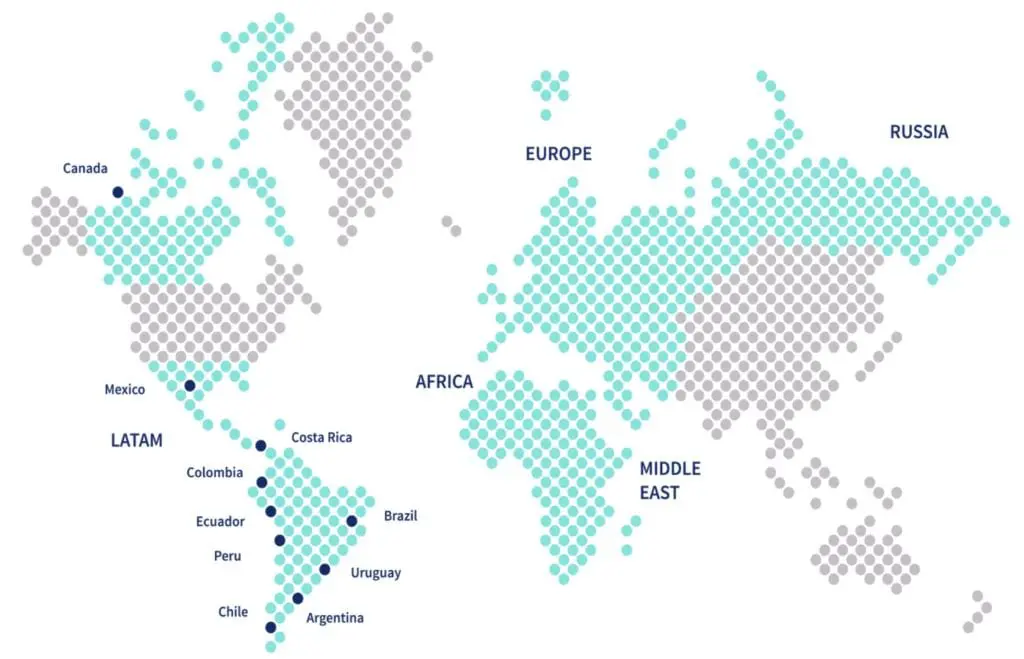
Board of Innovation is working with Roche across their innovation journey, on several projects, focused on transforming healthcare ecosystems with an outside-in approach focused on solving the unmet needs of patients.
With innovation initiatives such as the Caring Program, the Entrepreneurship Program, and the global Movement Health 2030, Roche is on a mission to make healthcare ecosystems across the world more sustainable and accessible.
Roche x Board of Innovation projects
Project
Movement Health 2030

Caring Program
Accelerating the innovation process with a shared knowledge platform and a solid innovation framework, aimed at solving the unmet patient needs.

Entrepreneurship Program
Roche innovation journey
Get inspired by Roche’s innovation journey and the approach the company is taking to innovating in the healthcare and life sciences space.Use this journey, the stages and the tools to drive your current and future healthcare innovation programs.
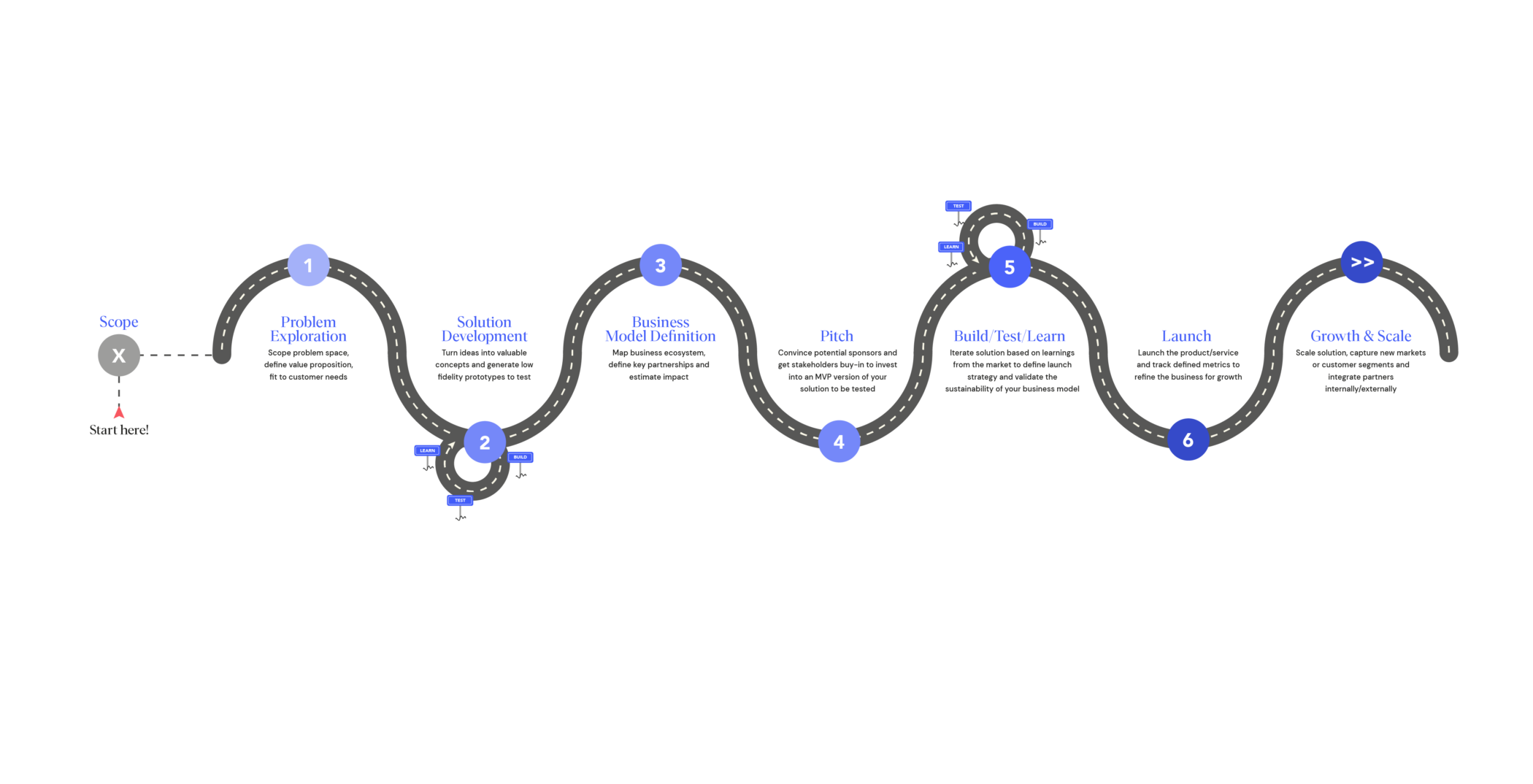
Stages of innovation at Roche
Scoping
In the scoping phase, focus is on identifying areas of opportunity or themes. You start by defining the right team to tackle challenges based on relevant expertise. Outcome: definition of challenges based on research and strategic priorities, and a team ready for kick-off.
↳Scoping canvas: the ultimate 1-page template to help your team align on the scope of your innovation project.
↳Assumption mapper: challenge and prioritize your assumptions
↳Team canvas: helps team members kick off projects and align on a common vision
↳Stakeholder map: identify and map out the key influencers related to your challenge
1. Problem exploration
At the problem exploration phase, focus is on defining unmet user needs or existing pain points, checking market opportunities, and defining a challenge statement for ideation. Outcome: persona and user journey, market opportunity, defined challenge, and a validated problem space.
↳Persona: designed to help you visualize and better understand your customer segment
↳Customer journey map: allows you to reconsider the interaction with your products or services from the customer's perspective
↳Problem sizing canvas: assess the size of a customer problem and determine if solving it could produce value for your business
↳Problem Validation Script: helps you go smoothly through your first problem validation interviews
↳'How might we' statement builder: allows you to explore potential innovation theses
2. Solution development
The solution development phase is about ideating around relevant challenges, based on multiple initial ideas. The selected solutions should be prototyped and taken through validation experiments. Outcome: multiple tested concepts, rapid prototypes, and validated learnings around experiments
↳Ideation Tools
↳First-step ideation tools: helps you ideate collaboratively with your colleagues
↳Build it, break it, fix it: collaboratively develop an idea, expand upon it, and then test its strength. Use it to grow your vision. Then tear it down and re-build.
↳Brainstorm cards: 52 triggers to generate new business ideas
↳Analogy thinking: helps you to identify and apply the best features from other solutions
↳Opposite thinking: this tool asks you to familiarize with the opposite side of things, to stretch the horizon of possibilities
↳Develop Concepts
↳Innovation battlefield: prioritize your most important features or concepts and make decisions on how to take them forward
↳Concept card: move quickly from random "post-it" ideas to a clear concept overview
↳Experiment card: clarify your experiments to validate your assumptions
3. Business model definition
In the business model definition phase, focus is on ideating potential business models and exploring and estimating revenue streams. These business models should run through validation experiments.Outcome: tested business model prototypes, high-level estimate of impact, and validated learnings around the business model and stakeholders.
↳Concept card: articulate the actual benefits of your solution and zone in on how your concept will serve customers
↳Business model kit: explore and imagine different business models to support your solution
↳Market sizing: estimate the revenue potential of your offering
↳Business model canvas: developing new or documenting existing business models
↳Revenue model flowchart: find new B2B revenue models and decide which are right for you
4. Pitching
The pitching stage of the innovation journey is about developing a clear and concise story and visual presentation, to pitch in front of senior stakeholders and decision makers.
↳Canvas for pitching: build the storyline of your pitch, covering all essential building blocks
↳Pitching checklist: this 5-part checklist is the best way to make sure your pitch hits home
↳Evaluating a pitch sheet: this tool will help you decide which pitch to give the green light
5. Build / Test / Learn
In the building/testing/learning stage, focus is on building an MVP of the product/service for launch, execute tests to evaluate performance, incorporate key learnings and iterate.Outcome: project the business viability of the idea, an estimate of the value the solution will generate, and a defined MVP of product/service before launch.
↳Concept disruptiveness test: could your new business model disrupt the market, or is it too safe?
6. Launch
At launch stage, the focus is on understanding different internal/external development options for solutions and assessing the investment possibilities. You will identify priorities, resources, and KPI’s.Outcome: a detailed program and marketing plan for release with defined roles, accountabilities, timeline and milestones. In some cases, here is where you will have the defined partnership model with third parties.
↳Go-to-market roadmap: capture and coordinate the timing and goals of the cross-functional activities related to launching a new product or service
↳Marketing planning: overview for your marketing planning to ensure a successful launch of your new product or service
↳Corporate-startup partnership mapper: map and clarify the responsibilities and goals of your corporate-startup partnership
↳Venture capital readiness: assess your readiness for a venture capital investment
Grow & Scale
When it comes to growing and scaling your idea, focus is on understanding strategies for customer acquisition and retention, and planning scaling rollout. Implement agile methodologies to your scaling roadmap, and define detailed actions and project features.Outcome: understanding different growth factors and how to apply them, and setting up marketing tactics to sustain growth of your product of service.
↳Growth engines: map and identify the crucial actions and tactics to implement to make sure a user becomes a paying customer
↳Customer barriers and boosters: identify what the barriers and boosters are for your customers to use your solution
↳Ecosystem mapping: by mapping ecosystems, you can uncover key stakeholders, and where value is created